
First, understand the normal hair cycle
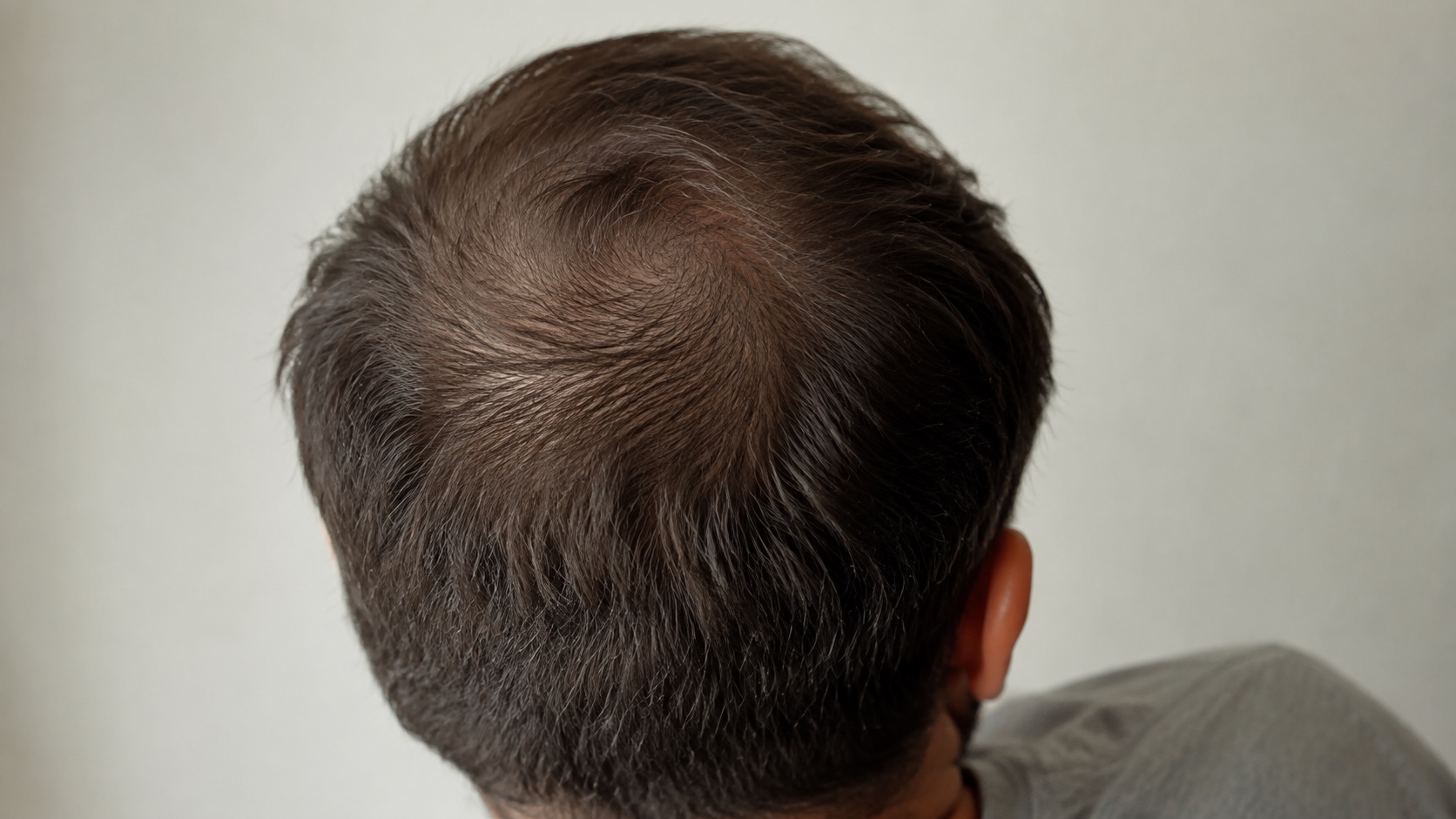
Hair grows in cycles. At any one time, some hairs are growing while others are resting or shedding. It is normal to lose hair each day, but a clear change in density, a widening parting, a receding hairline or persistent shedding deserves a closer look.
Photographs taken in similar lighting can be more useful than checking in the mirror every day. They help show whether a change is progressing and which areas are affected.
Pattern hair loss is common
Androgenetic alopecia, often called male or female pattern hair loss, is one of the most common causes. Genetics and sensitivity to hormones influence how susceptible follicles gradually become finer over time.
In men this may appear as a receding hairline, thinning temples or crown loss. In women it more often presents as reduced density through the central parting, although patterns vary between individuals.
Hair loss is not always genetic
Stress, illness, rapid weight change, nutritional deficiency, thyroid problems, medication, hormonal change and inflammatory or scarring scalp conditions can also affect growth. Some causes are temporary, while others need medical investigation or specialist treatment.
A sudden change, patchy loss, scalp pain, marked inflammation or loss accompanied by other symptoms should be assessed rather than treated as routine pattern hair loss.
What a hair-loss assessment considers
Dr Jamie reviews when the change began, how it has progressed, your family history, general health, medication and previous treatment. The scalp, hair-loss pattern and donor area are then considered together.
If the presentation suggests another medical cause, the right next step may be further investigation or referral. A transplant moves suitable donor follicles, but it does not diagnose every cause or stop future loss in untreated hair.
Treatment depends on the diagnosis
Options may include monitoring, evidence-based medical treatment, PRP for selected patients or hair transplant surgery where donor supply and long-term planning support it. More than one approach may be discussed, and sometimes waiting is the sensible choice.
The aim is not to sell a procedure. It is to give you a clear explanation of what appears to be happening and what can realistically be done about it.
Frequently asked questions
Clear answers to common questions.
What is the most common cause of hair loss?
Pattern hair loss is one of the most common causes in adults, but shedding, medication, illness, nutritional factors and scalp conditions can also contribute.
Can stress cause hair loss?
Yes. Physical or emotional stress can trigger increased shedding in some people. The timing, pattern and any other symptoms help determine whether another cause also needs consideration.
When should hair loss be assessed?
Book an assessment if the change is persistent, progressing, patchy or accompanied by scalp symptoms. Sudden loss or loss alongside other symptoms should be discussed with an appropriate medical professional.
Does a hair transplant stop future hair loss?
No. A transplant redistributes suitable donor follicles, but it does not stop thinning in non-transplanted hair. Long-term planning is therefore an important part of the consultation.

Written and reviewed by
Dr Jamie Harrison
Dr Jamie is a GMC-registered doctor who personally consults, plans and performs hair restoration and medical aesthetics treatment at The Rejuvenation Doctors in Bury.
About Dr JamieSources and further reading
This article provides general information and does not replace an individual medical assessment, diagnosis or treatment recommendation.